
Ham Branch Habitat Mitigation Project
CONTACT

Matt Stahman
Director, Regulatory
PROJECT SNAPSHOT
Project Type
Non-Bank ProjectLocation
Texas | Fort WorthSolution
Wetland and Stream MitigationEcological Setting
- Streams
- Wetlands
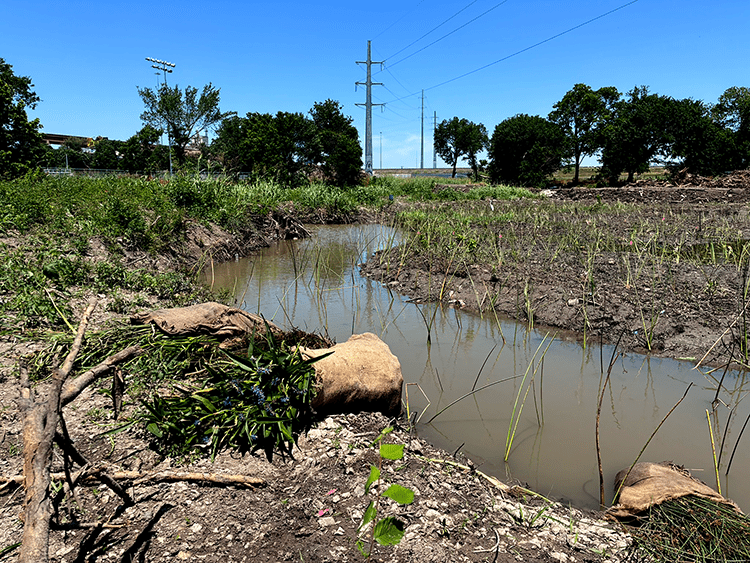
The Ham Branch Habitat Mitigation Project is a key environmental component of the Fort Worth Modified Central City Project, designed to restore ecological function while supporting large scale flood risk management efforts in Fort Worth, Texas.
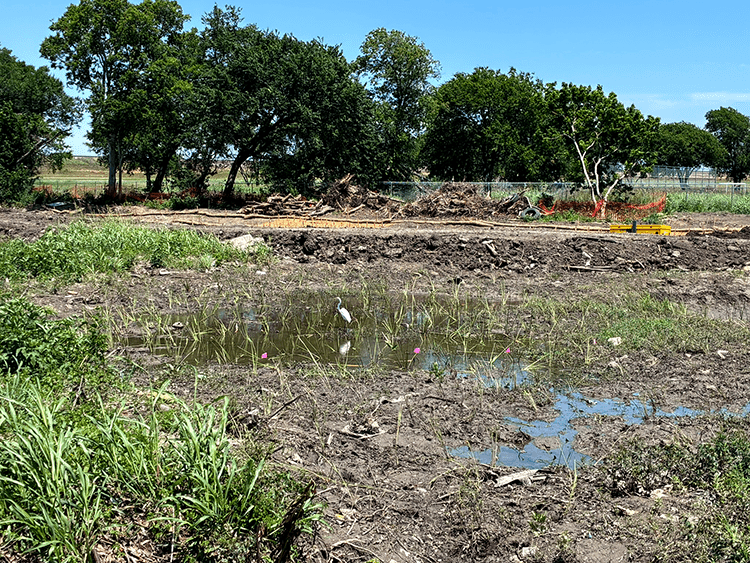
Located within a city park, the project will transform a degraded urban stream into a healthy, functioning stream and wetland system. By restoring natural processes and habitat, this project fulfills mitigation commitments established during the project’s National Environmental Policy Act review while creating long-term environmental and community value.
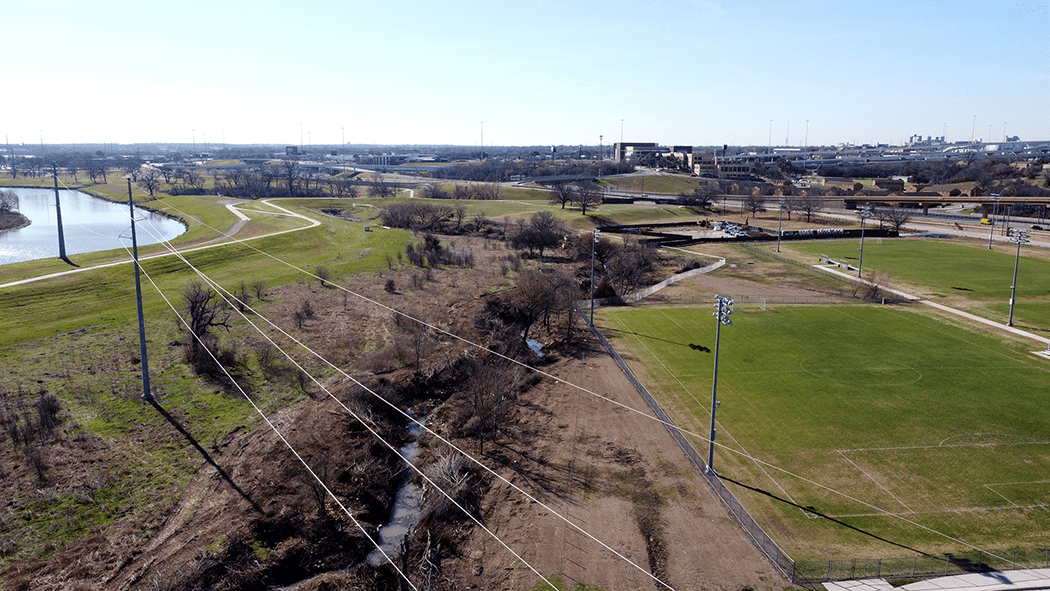
The Fort Worth Modified Central City Project is led by the U.S. Army Corps of Engineers in partnership with the Tarrant Regional Water District and the City of Fort Worth. Its primary goal is to reduce flood risk for thousands of homes, businesses, and more than one million residents by improving infrastructure, rerouting a portion of the Trinity River, and enhancing Gateway Park.
Within this broader effort, the Ham Branch Project plays an important mitigation role that supports the overall program objectives. The project focuses on restoring both physical and ecological integrity along Ham Branch, which currently flows through Harmon Field Park in a degraded condition.
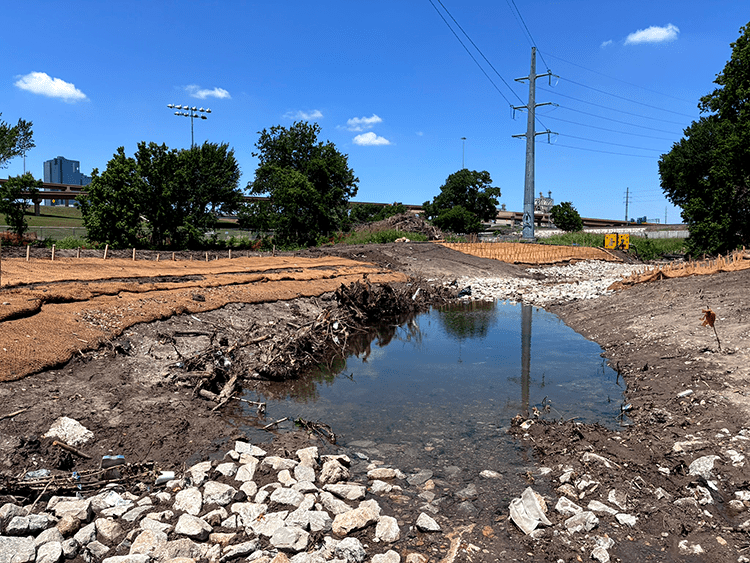
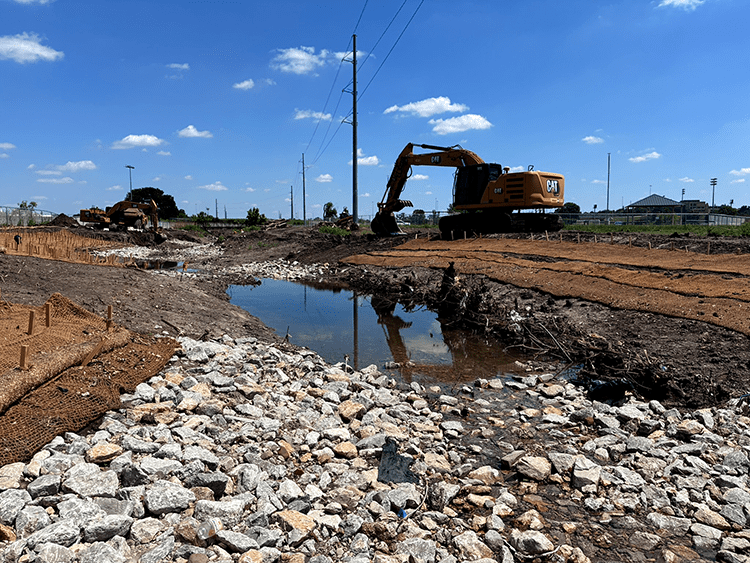
Additional infrastructure improvements support long-term performance and resilience. These include installation of an upstream trash collection system with maintenance access and removal of a downstream flap gate to improve connectivity with the Trinity River. Together, these actions will restore natural stream form and function, improve habitat continuity, and enhance the system’s ability to manage stormwater.
Function and performance
Once complete, the project will stabilize the stream’s bed and banks, reestablish a wooded riparian corridor, and revive wetland habitat that have been lost over time. It will also reduce the volume of trash transported downstream and improve fish passage between Ham Branch and the Trinity River.
Key elements
- Restoration of 1,965 linear feet of urban stream channel
- Reestablishment of native trees and vegetation across a 7.4-acre riparian corridor
- Creation of 0.6 acres of emergent wetland habitat
Project benefits
- Restores natural stream and wetland habitat within an urban environment
- Improves water quality and reduces downstream debris transport
- Enhances fish passage and ecological connectivity
- Re-establishes native vegetation and riparian function
- Supports compliance with federal mitigation requirements
- Contributes to long-term environmental resilience within a public park setting