
School Sisters of Notre Dame Campus Redevelopment
CONTACT

PROJECT SNAPSHOT
Project Type
Non-Bank ProjectLocation
Wisconsin | Village of Elm GroveSolution
BiodiversityEcological Setting
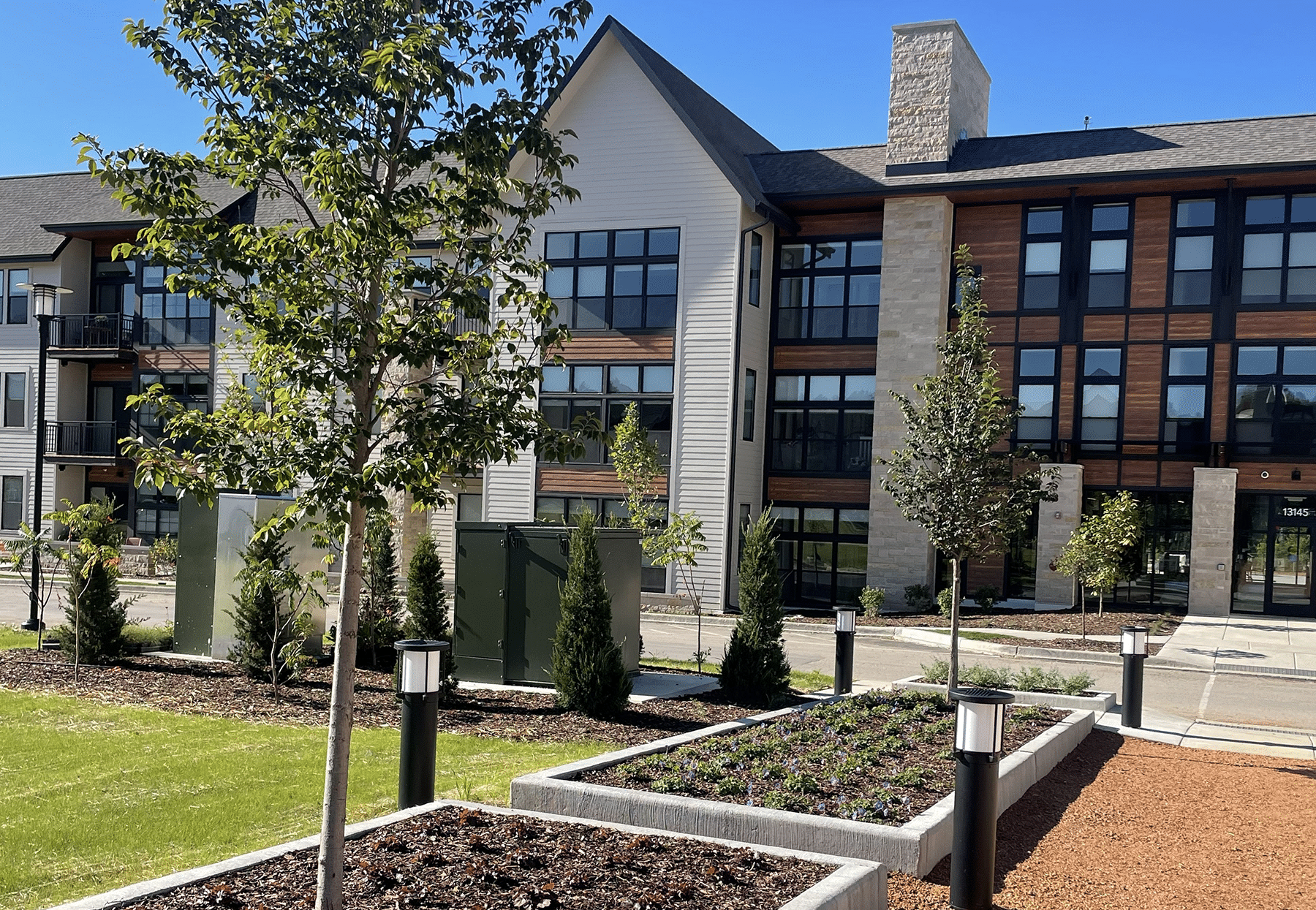
Green Infrastructure & Urban BMPsThe redevelopment of the School Sisters of Notre Dame campus in Elm Grove, Wisconsin, turned a 23-acre property into a new community for Mandel Group. RES served as a sub-consultant to the project architect, providing natural resource assessment, regulatory coordination, and in-house landscape design from 2019 through the end of construction in 2025. The project was completed on time and on budget.
Understanding the Site
RES began with a natural resources assessment to identify the regulated ecological resources on the property. The team researched state and federally regulated resources and the historic locations of stream channels, drawing on Village and County records, historic aerial imagery, original land survey notes, online resources, and regulatory agency information, then confirmed its findings through an on-site inspection.
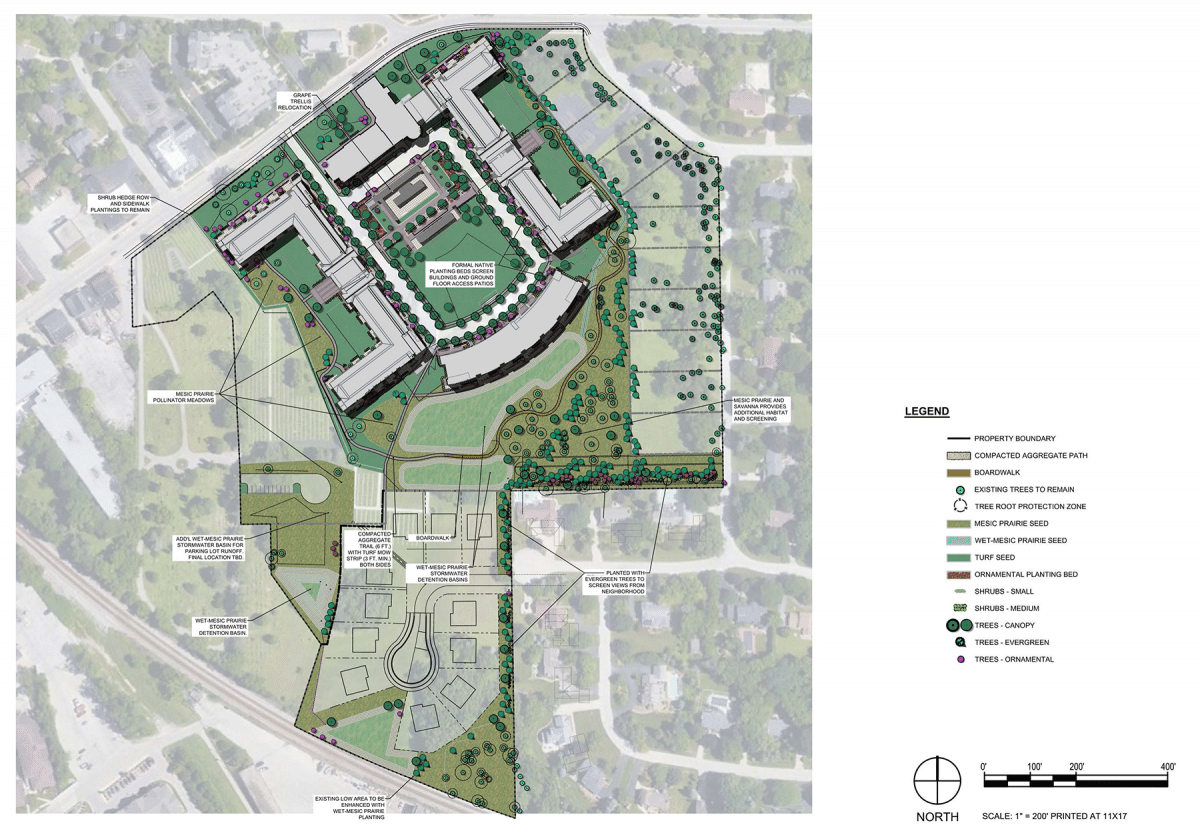
RES also completed a Certified Wetland Delineation, placing and geo-referencing wetland boundary flags in the field and finalizing the assessment during the growing season. A detailed tree survey followed, with RES tagging, identifying, and geo-referencing trees larger than 12 inches in diameter at breast height on the property and larger than 6 inches in the Village right-of-way. The resulting inventory of more than 400 existing trees guided a concerted effort to preserve desirable species, including elms, oaks, and maples.
Managing Stormwater
RES worked closely with the architect and civil engineer to retain stormwater on site. The team contributed to conceptual stormwater management plans and stream channel daylighting locations submitted to the Village of Elm Grove, and helped develop a Surface Water Drainage Plan showing how new runoff would be handled without affecting adjacent landowners. RES also contributed to the conceptual design of the Proposed Drainage Conditions Plan, the Stormwater Management Facilities Plan, and the Stream Hydraulic Geometry Design and Stabilization Plan. Native plantings outside the residential areas supplemented the on-site stormwater retention.
The project moved through an extensive public approval process spanning four years. The Village supported the redevelopment throughout, while some local homeowners pushed back. RES coordinated with the project team and with federal (U.S. Army Corps of Engineers and U.S. Fish and Wildlife Service), state (Wisconsin Department of Natural Resources), and local (County, Village, and Milwaukee Metropolitan Sewerage District) agencies on jurisdiction and permitting for design elements that could affect federal waters and wetlands, state wetlands and waterways, and threatened or endangered species.
Designing with Native Plants
RES designed and prepared the final Landscape Plan Construction Documents. The plans located all new and existing plant materials, incorporated the tree inventory to show which trees would be kept and removed, and listed the number, species, and size of every plant to be installed. All proposed plantings, both woody and herbaceous, were native species.
RES remained involved during installation. After nursery stock was delivered but before planting began, RES visited the site and gave Mandel Group and its general contractor written feedback on whether materials met the size, height, and quality specifications in the plans. A second visit, after roughly 25 to 33 percent of the material had been installed, produced additional written feedback on any deficiencies compared to the construction plans.
Client Benefits
- On-time, on-budget delivery. Mandel Group received a completed design that stayed on schedule and within budget across a six-year project.
- A clear picture of site constraints from the start. The Natural Resources Assessment, wetland delineation, and tree survey identified regulated resources early, giving the design team a reliable foundation for planning.
- Preservation of mature trees. An inventory of more than 400 trees allowed the project to prioritize keeping desirable elms, oaks, and maples.
- Support through a demanding approval process. RES coordinated with federal, state, and local agencies on jurisdiction and permitting, helping the project move through four years of public review.
- On-site stormwater management. Close coordination with the architect and civil engineer produced drainage and stormwater plans designed to handle new runoff without affecting neighboring landowners.
- An all-native planting palette. Every proposed woody and herbaceous planting was a native species.
- Quality control during installation. Two site visits with written feedback helped Mandel Group and its general contractor confirm that plant materials and installation matched the construction plans.