
Theodore Roosevelt Presidential Library
CONTACT
Theodore Roosevelt Presidential Library

PROJECT SNAPSHOT
Project Type
Non-Bank ProjectLocation
North Dakota | MedoraSolution
- Advisory Services
- Biodiversity
- Resiliency
Ecological Setting
- Grasslands, Prairies, & Upland Forests
- Native Vegetation & Pollinator Habitat
- Prairie
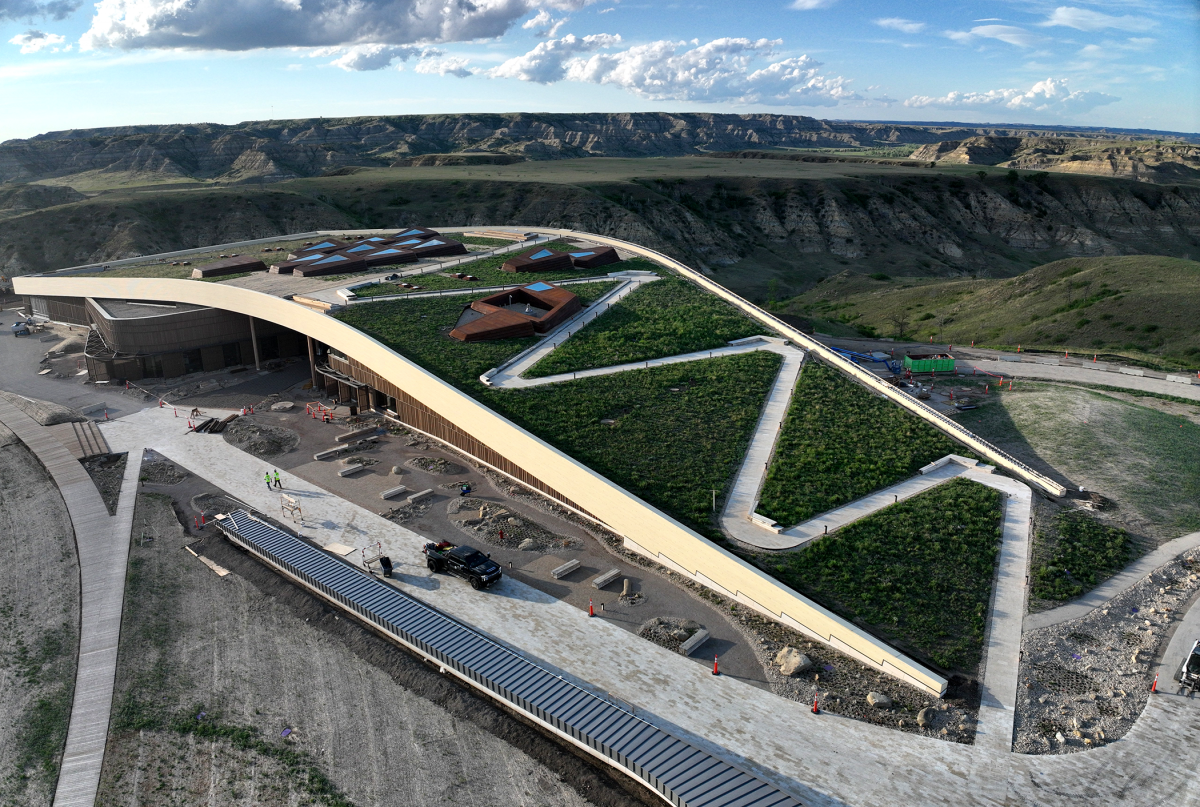
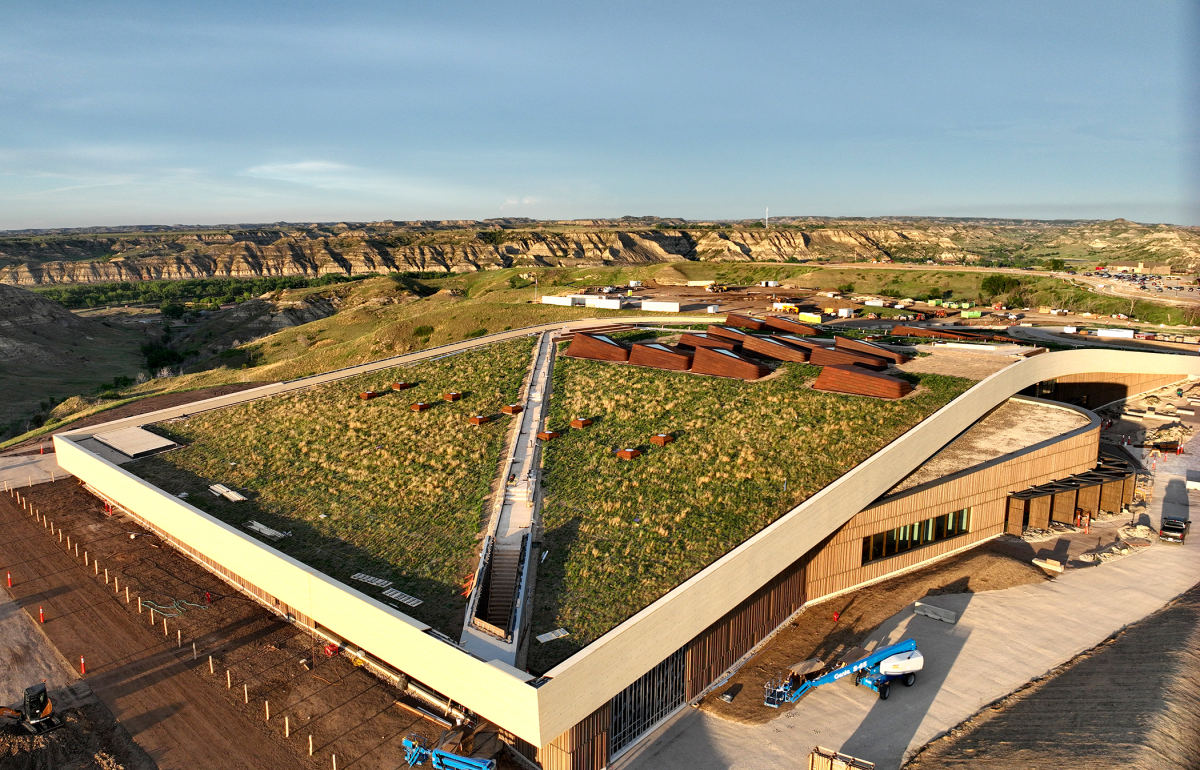
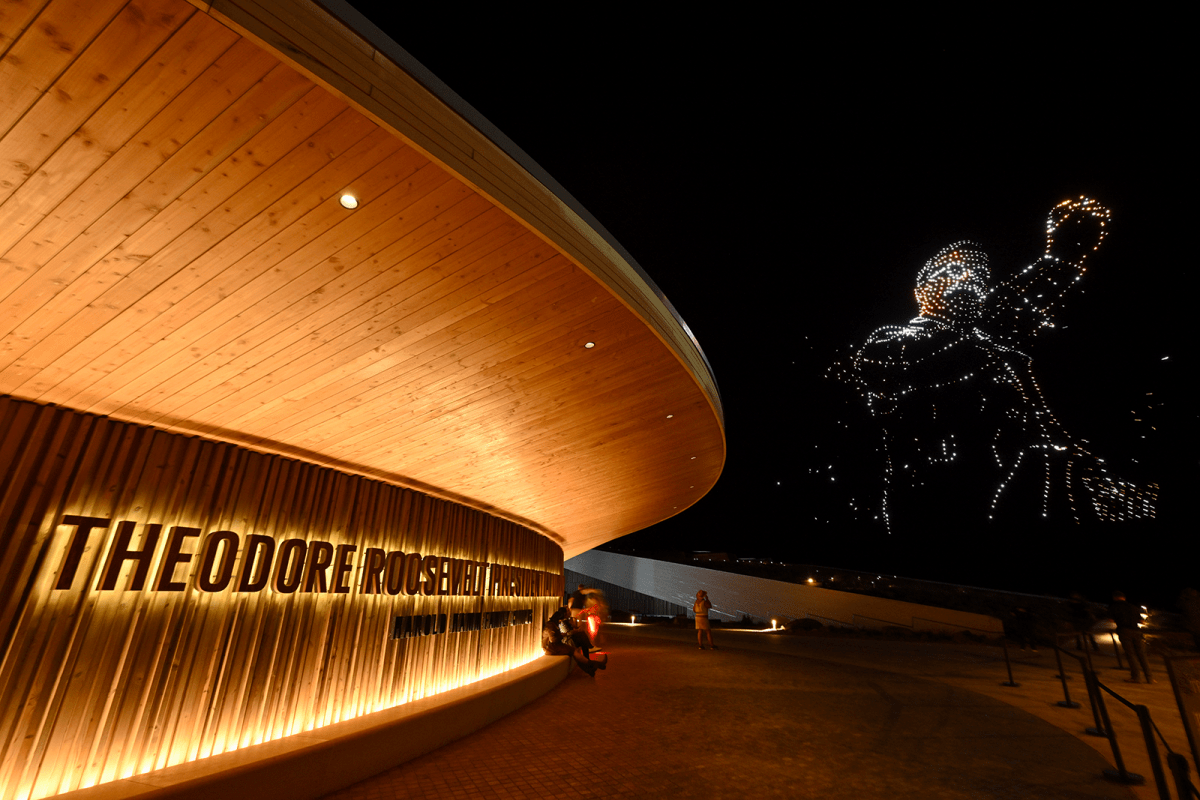
The Theodore Roosevelt Presidential Library (TRPL) in Medora, North Dakota, opened on July 4, 2026. The Library sits within 40 acres of restored native prairie and features a two-acre walkable green roof planted with more than 140,000 native plants. Rather than designing the building and then landscaping around it, the project integrated ecology into the design process from the beginning. The result is a site where architecture and landscape function as one system.
Integrating ecology into the landscape
From the international design competition through construction, ecological planning remained part of the conversation. Throughout the project, RES served as the ecological lead, injecting ecological principles and thinking into site design and sustainability goals in order to create a functioning landscape that is ecologically continuous with the North Dakota Badlands.
As the project moved from concept through schematic design, design development, and construction documentation, RES remained actively engaged. The team contributed to plans and specifications, and provided ecological guidance, evaluated restoration strategies, and helped ensure that the original conservation framework remained intact as design decisions evolved.
One of the project’s central ideas was that the landscape should not stop at the building’s edge. Instead, the prairie would continue across and over the structure itself, creating a seamless connection between architecture and the surrounding natural environment.
The native plant project
Establishing a native prairie at this scale required thoughtful early-stage support. In 2022, a year before construction began, the TRPLF, Snøhetta, Confluence, and RES launched a large-scale prairie conservation initiative focused on rebuilding native plant communities across the site. The effort began with a simple but important goal: collect seeds from locally adapted native plants and use them to create a resilient, biodiverse landscape matching the landscape.
Over three growing seasons, students, community volunteers, ecologists, and landscape professionals collected more than 350 pounds of seed representing more than 200 native plant species. Many of these species are not commercially available and have become increasingly rare across western North Dakota. Collection efforts took place throughout the Little Missouri Badlands, including Theodore Roosevelt’s historic Maltese Cross and Elkhorn Ranch properties, where plants have adapted to the region’s unique climate and conditions.
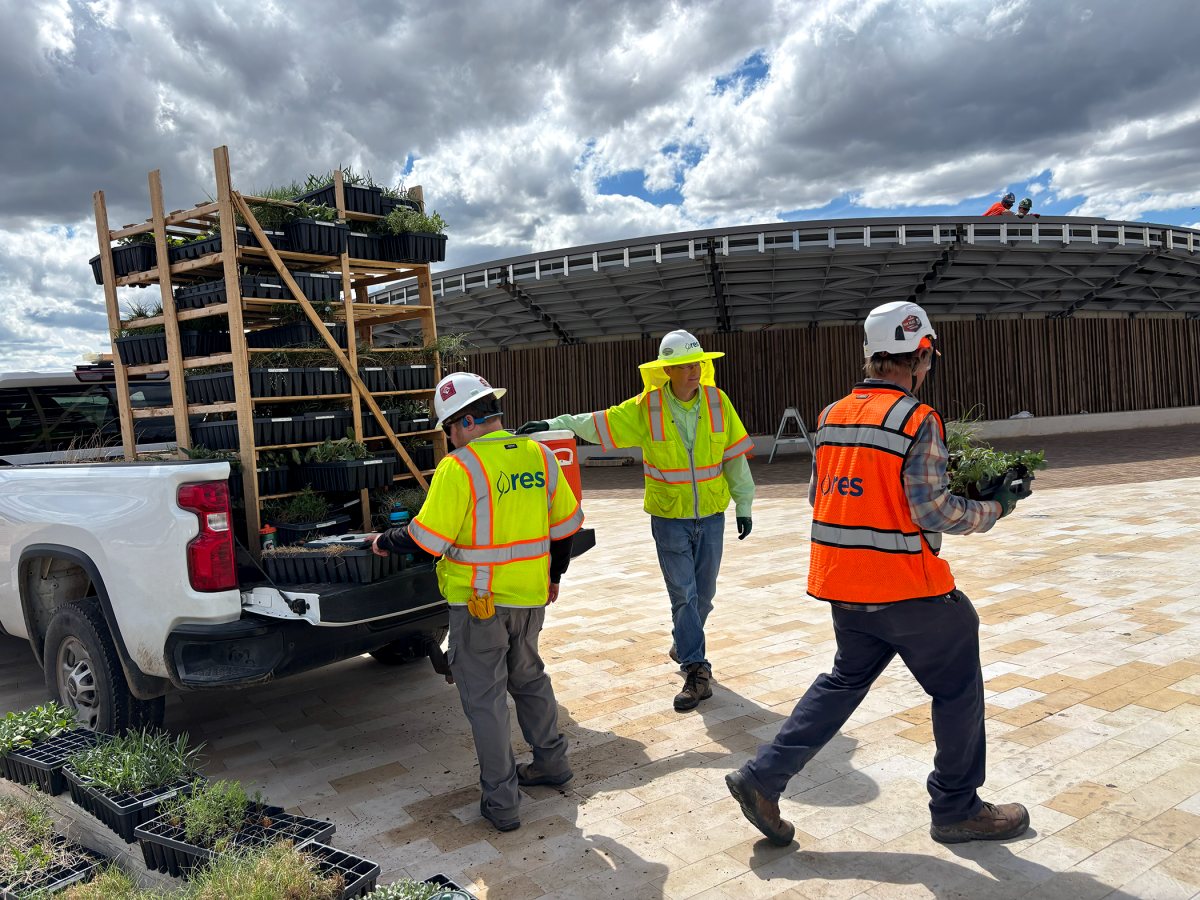
Once collected, seeds were carefully cleaned, dried, cataloged, and stored to preserve their viability. RES then germinated and cultivated many of these species at its Taylor Creek Nursery , while additional plants were grown and expanded at the North Dakota State University Hettinger Research Extension Center. This multi-year process produced thousands of native plant plugs and additional seed needed to restore the Library landscape. More than 400,000 plants were produced through this process, which were used throughout the site.
Creating a prairie on the roof
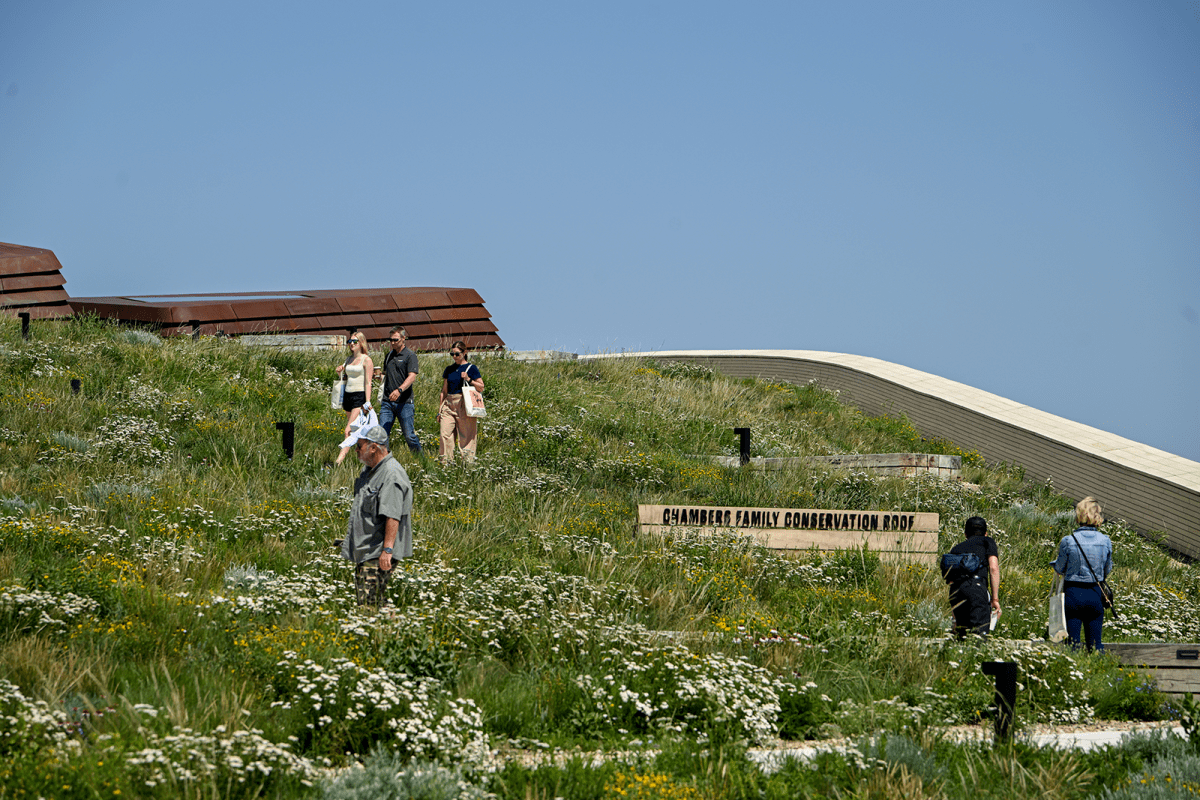
During design, RES worked with project partners to advise on soil depths, native plant selection, ecological performance, and long-term habitat value while balancing engineering requirements, construction sequencing, and budget considerations. The completed roof contains more than 140,000 native plants growing within approximately 15 inches of engineered soil, making it one of the largest native green roofs in North America.
Visitors can walk across the roof and experience the prairie while overlooking the Little Missouri River valley, Little Missouri National Grasslands, and Theodore Roosevelt National Park. The roof demonstrates how ecological design can become part of the visitor experience instead of remaining hidden behind the building.
Built to the highest standards
Sustainability guided every aspect of TRPL. The Library is pursuing some of the highest sustainability certifications in the world, including:
-
- Living Building Challenge v4.0 Full Certification
- LEED BD+C v4.1 Platinum
- SITES v2 Platinum
While these frameworks evaluate a wide range of building and site performance criteria, RES focused on the ecological components of the project. The team provided technical guidance, supporting documentation, and ecological rationale related to habitat restoration, biodiversity, protection of natural features, landscape performance, and other site sustainability goals.

The Theodore Roosevelt Presidential Library opened to the public on July 4, 2026, the 250th anniversary of American independence. Designed by Snøhetta and built around the pillars of leadership, citizenship, and conservation, the Library brings together the comprehensive story of America’s 26th president. Designed to be the only carbon-neutral presidential library in the world, TRPL features immersive galleries, 142 original artifacts, a mile-long boardwalk, and a walkable green roof. Visit https://www.trlibrary.com/ for more information or to plan your visit.
Project StoryMap
National News
- The new Theodore Roosevelt Presidential Library | CBS News
- Theodore Roosevelt Presidential Library opening in North Dakota Badlands | CBS News
- What is Teddy Roosevelt Presidential Library Doing in North Dakota? | New York Times
- Associated Press Trump will visit newly built Theodore Roosevelt Presidential Library in North Dakota’s Badlands
- Architectural Digest See the Theodore Roosevelt Presidential Library, a Stunning New Cultural Institution Built Into the Badlands
- RES Helps Bring Conservation Legacy to Life at New Presidential Library
- Axios Bank of America’s $5M gift to new Teddy Roosevelt library
- Newsmax Ken Griffin Gives $26 Million to Theodore Roosevelt Presidential Library
Design/Architecture/Construction
Television/Video
North Dakota and Regional News
- Theodore Roosevelt Presidential Library is a miracle on the prairie | Grand Forks Herald
- North Dakota Tourism Theodore Roosevelt Presidential Library Opens July 4
- Governor Armstrong and Lt. Governor Strinden celebrate grand opening of Theodore Roosevelt Presidential Library in Medora
- Bismarck Tribune – Live opening coverage
- Roundup Web / North Dakota Monitor
Additional Coverage