
Ecological Site Solutions
NATURE-BASED SITE DESIGN
RES builds ecology into every site
Site-specific ecological planning built into architecture, engineering, and construction from day one. Native landscapes, soils, habitat, and green infrastructure shape how your site functions throughout its lifetime.
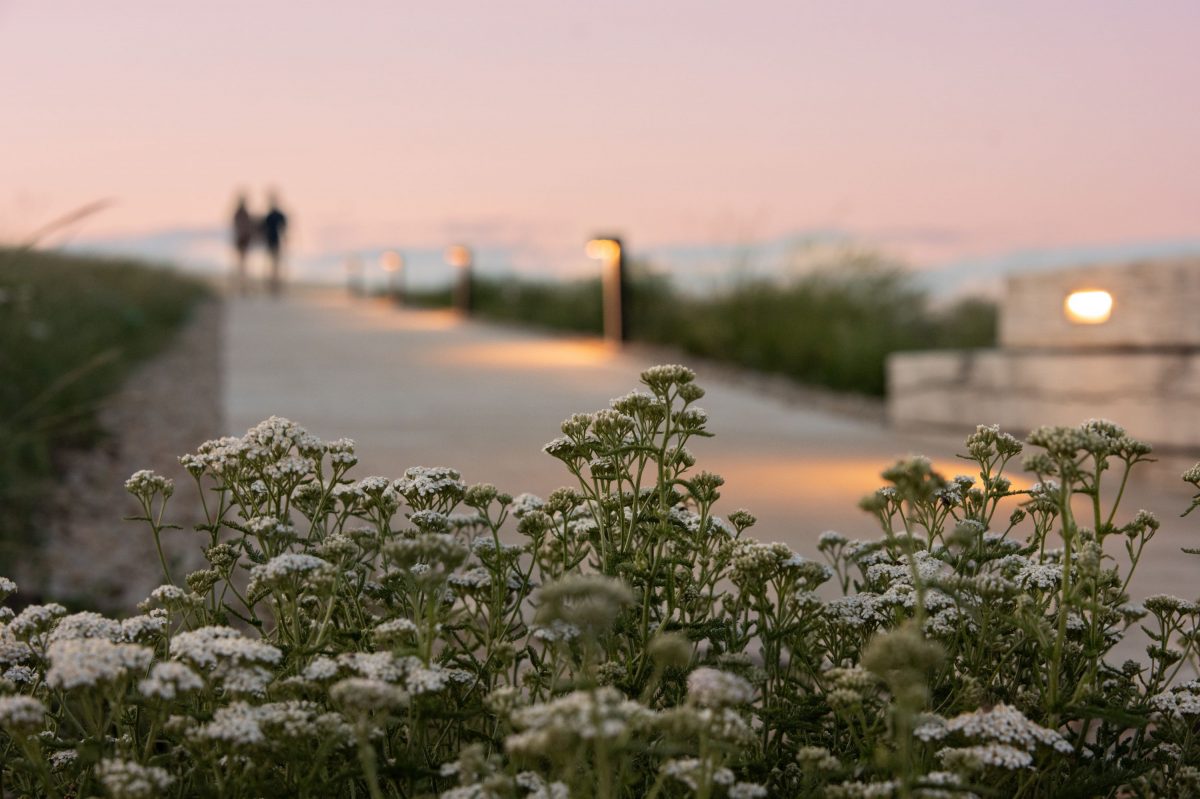
Design ecology in, not around
Ecological Site Solutions (ESS) are engineered systems of native landscapes, habitat, soil uplift, and nature-based stormwater management, tailored to each property’s soils, climate, hydrology, and ecological potential. They are the on-site pillar of Nature-based Solutions (NbS).
Landscaping usually comes last, planned around a finished building. RES integrates ecological planning alongside architecture, engineering, and construction from the earliest stages, and serves as a single partner for design, permitting, construction, and verification.
Every element performs a function: stormwater management, heat mitigation, biodiversity uplift, or public access. ESS lowers long-term operating costs, supports permitting and community approval, and advances sustainability goals for finance, development, and sustainability teams alike.
Ecology isn’t a separate scope. It’s how the site works.
The key is starting early
ESS works best when it’s designed in from the start. Planned early, it costs less to build and performs better. Added late, it becomes an expense instead of an asset.
Already running a native plant program? ESS builds on it.
ESS pairs with water stewardship and early mitigation planning to address operational, regulatory, and stakeholder priorities together.
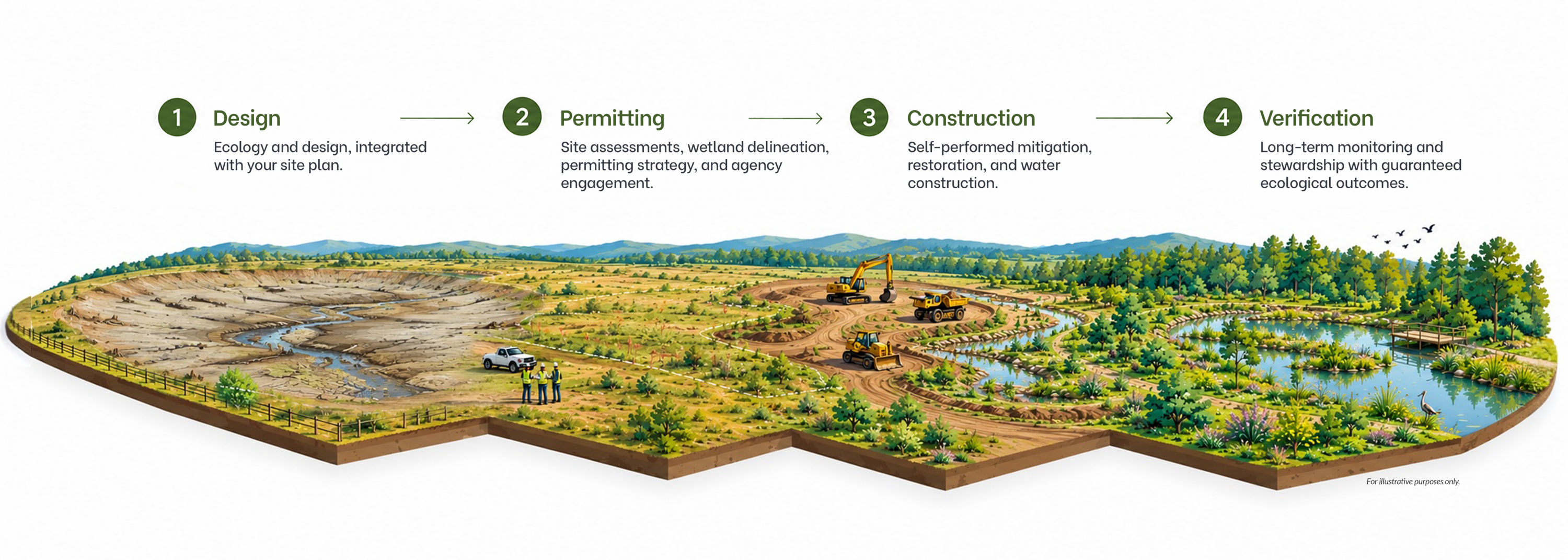
With an early start, ESS is designed to give back
What ESS replaces, and what you get back
- Native landscape restoration (instead of turf grass and ornamental planting) → Lower irrigation, mowing, and pest management costs year after year, with reduced fire and drought risk.
- Nature-based stormwater management (instead of engineered detention basins, piping, and hard channels) → Regulatory compliance, often at lower lifecycle cost than gray infrastructure.
- On-site stream or wetland restoration (instead of off-site mitigation credits) → A mitigation obligation converted into an on-site asset: two requirements met with one investment.
- Habitat corridors (instead of fragmented remnant vegetation) → Measurable biodiversity uplift that supports corporate environmental reporting. Learn more about habitat corridors.
- Trails and accessible green space (instead of fenced setbacks and buffer land) → Required buffer acreage put to work as a documented benefit for employees, visitors, and neighbors.
- Ecological restoration with community co-benefits (instead of landscaping that does nothing for neighbors) → A visible local contribution that can ease community concerns during approvals.
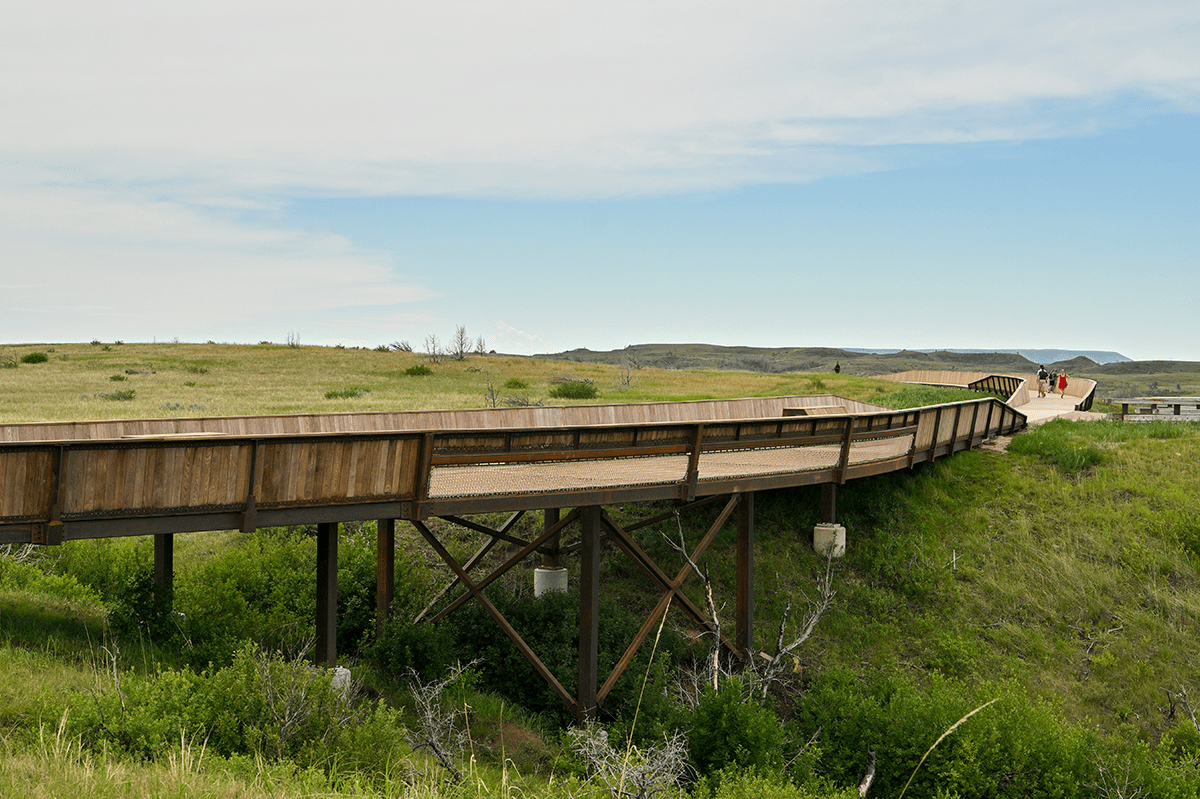

RES ESS Projects
-
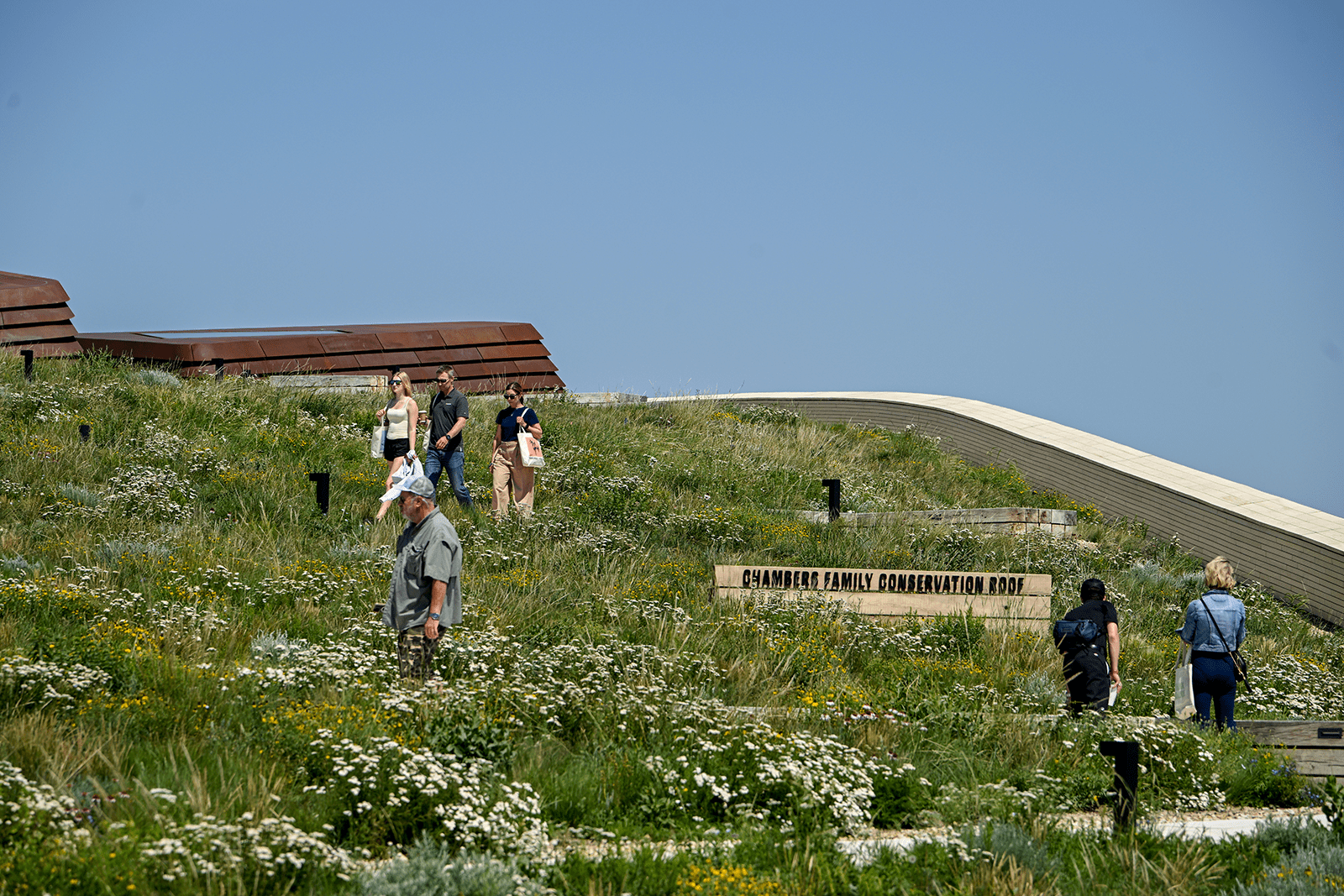
Theodore Roosevelt Presidential Library | Medora, ND
-
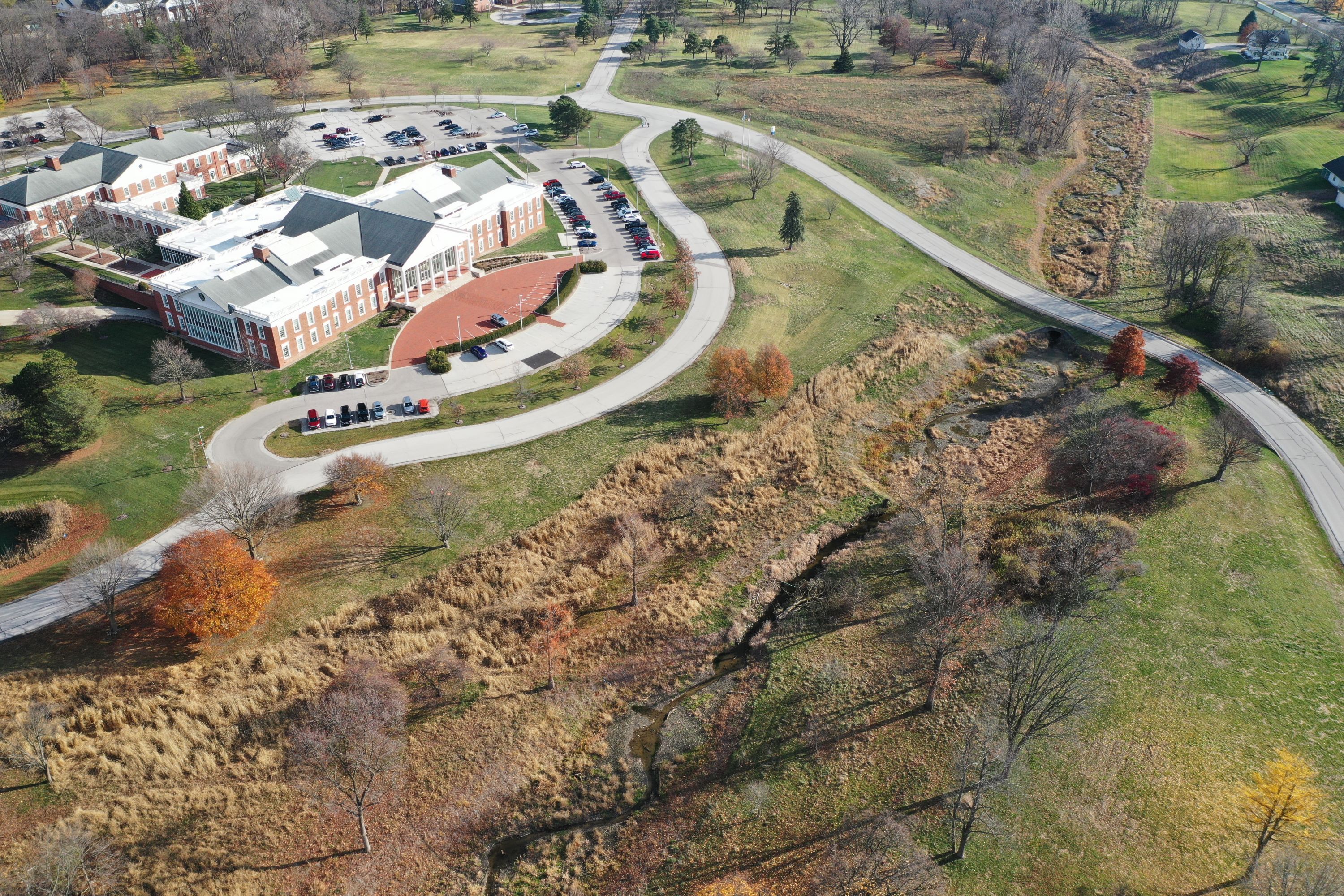
The University of Toledo Center for Alumni and Donor Engagement Restoration Project | Toledo, OH
Green infrastructure that manages stormwater at its source
Stormwater is easiest to manage where it falls. Green infrastructure turns runoff into a site feature rather than a problem to be piped away.
RES provides full-service green infrastructure design, permitting, construction, and long-term stewardship across the United States, from rain gardens and bioswales in urban neighborhoods to constructed wetlands and floodplain restoration.
Rain gardens, bioswales, permeable pavements, and constructed wetlands work together to capture, treat, and slow stormwater, reducing overflows while creating cleaner waterways, cooler neighborhoods, and healthier ecosystems.


